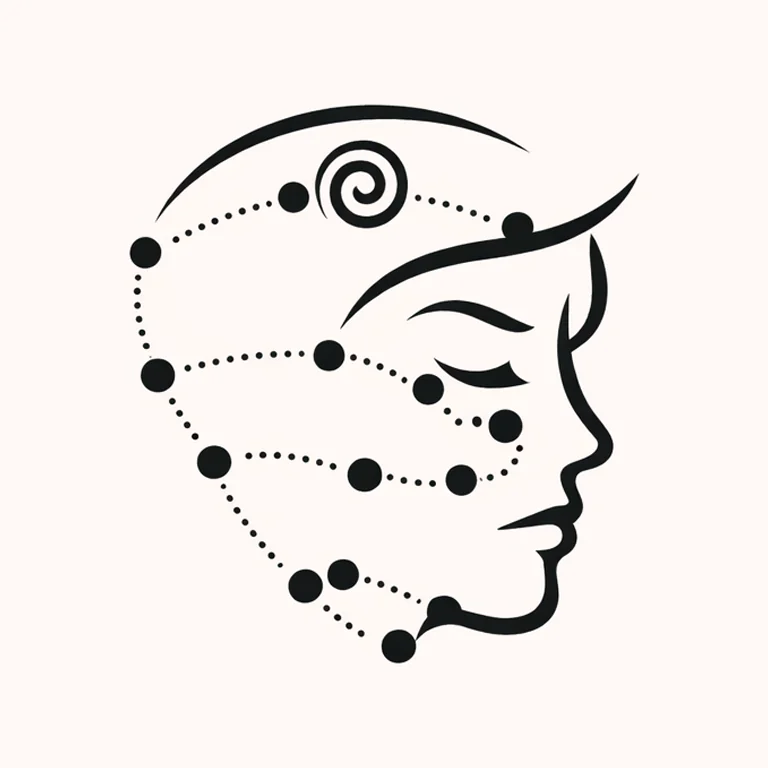
As gentle touch is introduced, the body responds with a kind of recognition. The hands move with intention across the face, along the scalp, down the neck, and across the meridian lines that guide the flow of our energy. Each area reveals something different tension that has been protecting us, tightness that has been holding back emotion, or warmth that signals release. These sensations are not random; they are the body’s way of speaking.
The face begins to soften first. Muscles around the eyes release the strain of constant alertness. The jaw loosens, letting go of unspoken words and quiet frustrations. As the scalp is touched, the mind feels less crowded, as if thoughts have more room to breathe. The neck unwinds, releasing the weight of responsibilities we’ve been carrying without noticing.
Working along the meridians deepens this process. These pathways connect emotional themes—courage, grief, worry, joy, fear and when they are gently stimulated, they help us understand where our emotional energy has been blocked or depleted. The release may come as warmth, tingling, or a sense of spaciousness. It may come as a memory, a feeling, or a quiet sense of relief.
As the session continues, the nervous system begins to settle. The breath deepens. The mind quiets. The body shifts from holding to allowing. This creates a space where emotions can rise without overwhelming us. The therapy becomes a conversation between touch and emotion, between the physical body and the inner self.
By the end, the face looks more open, the eyes brighter, the neck longer, the breath steadier. But the most meaningful change is internal. We feel more connected to ourselves, more aware of what we’ve been carrying, and more able to release what no longer serves us. Facial Emotional Therapy becomes a reminder that healing can begin with gentle presence, mindful touch, and the willingness to listen to the body’s quiet wisdom.